
5 Important Things We Check Before Stocking Vannamei Post-Larvae

Stocking high-quality post-larvae (PL) is one of the most important steps at the beginning of a Vannamei shrimp culture cycle. However, selecting good-quality PL is only part of the process. How the PL are transported, acclimatized, checked, and handled before stocking can also affect how well they adapt to their new culture environment.
At RAS Aquaculture, we do not immediately release the PL into the culture tank when they arrive at our farm. Before stocking, we first carry out an acclimatization process and check several important water-quality parameters and the physical condition of the PL.
In this article, we will explain how we transport our Vannamei PL, what acclimatization means, and the five important things we check before stocking: salinity, temperature, pH, dissolved oxygen, and PL health and physical condition.
How We Transport Vannamei Post-Larvae
At our farm, we normally use two methods to transport Vannamei PL from the hatchery: plastic bags or a 300-liter fiber tank.
Transporting PL Using Plastic Bags
When plastic bags are used, each bag can carry approximately 2,000 PL.
One advantage of this method is that the PL are relatively easy to handle and transfer when they arrive at the farm. Since each bag already contains an estimated number of PL, the bags can be allocated to the designated culture tanks according to the planned stocking density.

The bags can also be floated in the culture tank during temperature acclimatization before the PL are released.
Transporting PL Using a 300-Liter Fiber Tank
For larger quantities, we can use a 300-liter fiber tank, which can transport approximately 50,000 PL, depending on the transportation conditions and duration.

Because a large number of PL are transported together in one tank, continuous aeration is important. Before transportation, we make sure the aeration system and oxygen supply are functioning properly and that sufficient oxygen is available throughout the expected transportation period.
Handling is also different when the fiber tank arrives at the farm.
Unlike individual plastic bags, the PL cannot simply be transferred directly into the designated tanks. We carefully scoop the PL from the fiber tank and weigh PL samples. The weight is used as part of our estimation process to determine the quantity being transferred into each culture tank.

Therefore, both transportation methods have their advantages. Plastic bags make separation and transfer easier, while a 300-liter fiber tank allows us to transport a much larger number of PL together but requires continuous aeration and additional handling during stocking.
What Is Acclimatization?
Regardless of the transportation method, we do not immediately release newly arrived PL into the culture tank. We first carry out acclimatization. Acclimatization is the process of gradually allowing the PL to adjust from the conditions of the transport water to the conditions of the culture tank. The water at the hatchery or inside the transport bag or fiber tank may have different salinity, temperature, pH, and dissolved oxygen levels compared with the water at the farm. A sudden environmental change can place additional stress on PL that have already experienced handling and transportation. Proper acclimatization is therefore intended to make this transition as smooth as possible before stocking. Importantly, acclimatization is not simply about waiting for 15 or 30 minutes. We check the actual conditions of the transport water, compare them with the culture tank, and observe how the PL respond.
Here are the five main things we check.
Salinity
Before stocking, we measure the salinity of the transport water and compare it with the salinity of our culture tank.
At our farm, we aim to keep the difference between the two at approximately 3 ppt or less before stocking. If the difference is larger, more careful acclimatization is required.
For example, if our culture tank is maintained at 15 ppt, we want the PL transport water to be reasonably close to this level.
Salinity Acclimatization Starts Before Transportation
Our salinity management actually begins before the PL leave the hatchery.
We normally inform the hatchery about the salinity of our culture tank in advance. This gives the hatchery an opportunity to gradually adjust the PL closer to our farm's salinity before transportation.
Although Vannamei shrimp can tolerate a relatively wide salinity range, the concern during stocking is not simply whether the salinity is high or low. What we want to avoid is a large and sudden change.
Shrimp maintain the balance of water and salts inside their bodies through a process known as osmoregulation. When salinity changes suddenly, the PL need to rapidly adjust their internal water and salt balance, which requires energy and can create additional stress.
What If the Salinity Is Different?
If the culture tank has a lower salinity than the transport water, we can gradually introduce clean, lower-salinity water to bring the PL water closer to the culture tank conditions.
For example, if the PL arrive at 20 ppt while the culture tank is 15 ppt, we do not immediately transfer them from 20 ppt to 15 ppt. The adjustment is made gradually while salinity and PL behaviour are monitored.
If the culture tank salinity is higher than the PL transport water, the salinity also needs to be increased gradually.
Whenever possible, properly mixed water is preferred instead of exposing PL directly to undissolved salt. Raw salt can temporarily create areas of very high salinity before it completely dissolves.
Throughout acclimatization, we continue monitoring salinity and observing the PL. Once the difference is within our acceptable range and the other parameters are suitable, we can proceed with stocking.
Temperature
At our farm, our culture tank temperature is normally around 27°C, while PL transport water is usually cooler, at approximately 23–24°C.
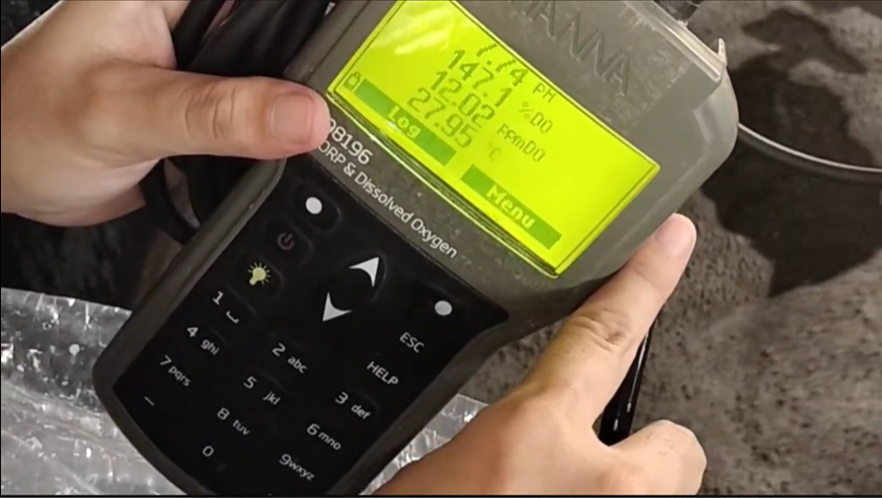
The lower transportation temperature helps reduce the metabolic activity of the PL. When their metabolism slows, they become less active, consume less oxygen, and produce less metabolic waste.
This can be particularly useful when a large number of PL need to be transported for several hours.
However, after transportation, we do not want to suddenly move the PL from 23–24°C water directly into a culture tank at approximately 27°C.
A sudden temperature difference can cause thermal stress.
Temperature Adjustment for Plastic Bags
When PL arrive in plastic bags, we normally float the sealed bags in the culture tank for approximately 15–30 minutes, depending on the temperature difference.
This allows the temperature inside the bag to gradually become closer to the culture tank temperature.
Temperature Adjustment for Fiber Tanks
For a fiber tank, the principle remains the same.
We measure the transport-water temperature, compare it with the culture tank, and allow the temperature to gradually increase while monitoring the PL.
Regardless of the transportation method, our objective is to reduce the temperature difference gradually and avoid temperature shock.
pH
We measure the pH of the transport water and compare it with the culture tank water before stocking.
For Vannamei PL, a suitable pH is generally around 7.5–8.5, while our farm normally operates at approximately pH 8.0–8.5.
Transport water chemistry can change during the journey. PL continuously respire and release carbon dioxide (CO₂). In a closed transport environment, CO₂ can accumulate and contribute to a reduction in pH.

Under certain transportation conditions, pH can potentially fall significantly, even to around pH 5.33, although we have never experienced a drop this low during PL transportation at our farm.
Even when the decrease is less severe, there may still be a noticeable difference between the transport water and culture tank.
Suddenly transferring PL between waters with substantially different pH values can create additional physiological stress.
For this reason, we always check both water sources and try to avoid sudden environmental changes during acclimatization.
Dissolved Oxygen (DO)
Sufficient dissolved oxygen is essential throughout transportation, acclimatization, and stocking.
This becomes especially important when thousands of PL are being transported in a relatively small volume of water. The PL continuously consume oxygen through respiration.
When they arrive at the farm and the water temperature begins to increase, their metabolic activity may also increase. As a result, their oxygen demand can increase as well.
At our farm, we aim to maintain DO at more than 6 mg/L during PL acclimatization.
If dissolved oxygen becomes too low, the PL may become stressed or weak. We may also notice reduced activity or abnormal swimming behaviour.
Maintaining sufficient oxygen therefore helps keep the PL active and in good condition before they are stocked into the culture system.
PL Health and Physical Condition
Water-quality instruments can tell us what is happening in the water, but they cannot completely tell us how the shrimp are responding.
This is why direct observation of the PL is equally important.
We look at several indicators, including swimming activity, responsiveness, physical appearance, deformities, injuries, discoloration, size uniformity, weak individuals, and mortality.
Healthy PL should generally appear active and responsive.
If a large number appear weak, inactive, or display abnormal swimming behaviour, this may indicate that the PL have experienced significant stress or that environmental conditions require further investigation.
Monitoring Does Not Stop After Stocking
Successfully releasing PL into the culture tank does not mean the stocking process is complete.
Approximately 2–3 hours after stocking, we check the PL again.

Samples are collected from different areas of the tank using a scoop net. We observe whether the PL are actively swimming, responsive, and beginning to distribute throughout the culture tank.
Healthy PL should generally be capable of swimming against the water current.
Large numbers of weak PL gathering around the tank edges, corners, or surface may indicate a problem. If abnormal behaviour is observed, parameters such as DO, temperature, salinity, pH, and aeration should be checked.
Observation continues during the first 24–48 hours after stocking.
Low mortality during this period is a useful indication that the PL have adapted well to transportation, acclimatization, and their new culture environment.
Stress Testing Before Stocking
Physical appearance alone cannot provide a complete picture of PL quality.
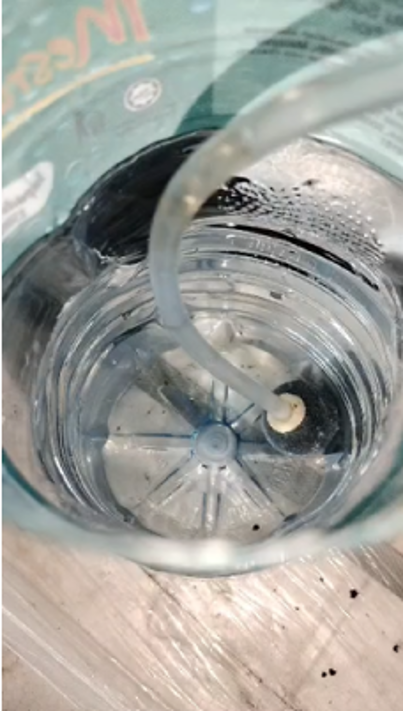
For this reason, we also conduct a stress test to evaluate the robustness of the batch.
In our farm procedure, 10 PL are randomly selected and placed in freshwater for 30 minutes. Their survival is then evaluated.
We interpret the results as follows:
Below 60% survival: The batch does not proceed directly to stocking and requires further evaluation.
60–90% survival: The batch is treated with caution and requires closer observation.
Above 90% survival: The PL have performed well in our stress test, subject to the other quality and disease-screening requirements.
This test provides another indication of PL robustness that may not be obvious from appearance alone.
Disease Screening
The final assessment is disease screening.
A batch of PL may look healthy and active but still carry pathogens that cannot be identified through visual inspection.
For our disease-testing procedure, approximately 10–15 PL are randomly sampled. The samples are placed in a properly labelled container containing ethanol according to the laboratory's sample-preservation requirements.
Information such as the PL batch, hatchery or source, and sampling date is recorded before the sample is sent to the laboratory.
Depending on the pathogen being investigated, laboratory methods such as PCR-based testing may be used.
The laboratory results are then considered together with the PL's physical condition, stress-test performance, and other quality assessments before the final stocking decision is made.
Good Stocking Starts With Good Preparation
Stocking Vannamei PL is more than simply transferring shrimp from a transport container into a culture tank.
It is a transition between two different environments.
Salinity, temperature, pH, dissolved oxygen, and PL condition all provide valuable information about whether the animals are ready for that transition.
More importantly, there is no single acclimatization time that works for every batch. Transportation conditions, water-quality differences, and PL responses can vary.
That is why we focus on measuring, comparing, and observing rather than relying only on time.
A successful shrimp culture cycle starts with good-quality PL—but it also depends on how those PL are transported, evaluated, acclimatized, and handled during the first critical hours at the farm.
REFERENECES
McGraw, W. J., Davis, D. A., Teichert-Coddington, D., & Rouse, D. B. — Survival of Post-larval Litopenaeus vannamei Following Acclimation to Low Salinity Waters at Different Temperatures.
Álvarez, A. L. et al. — Salinity stress test as a predictor of survival during growout in Pacific white shrimp.
Abrori, M. et al. (2022) — Survival, osmoregulatory and hemocyte changes in Litopenaeus vannamei postlarvae under progressive osmotic stress.


Comments