
Why Practical Experience Matters in Shrimp Farming: What You'll Learn During Our 5-Day Practical Shrimp Farming Experience
Many people believe that after attending a shrimp farming course, they are ready to operate a commercial shrimp farm. While learning the theory is an essential first step, successful shrimp farming requires much more than understanding concepts in a classroom.
Operating a commercial shrimp farm involves making daily decisions that directly affect shrimp health, water quality, production performance, and farm profitability. These decisions are based not only on knowledge but also on experience gained through working in a real production environment.
At RAS Aquaculture, we believe that practical experience is one of the most valuable investments an aspiring shrimp farmer can make. That is why we developed our 5-Day Practical Shrimp Farming Experience—a hands-on training programme that allows participants to work alongside our farm team and experience the daily operations of a commercial biofloc shrimp farm.
Theory Alone Is Not Enough
There is a significant difference between learning about shrimp farming and actually operating a shrimp farm.
For example, anyone can read about water quality management in a textbook. However, maintaining stable water quality requires daily monitoring, interpreting water quality data, recognising changes before they become problems, and making timely management decisions.
The same applies to farm equipment. Understanding how paddlewheel aerators or root blowers work is very different from operating, inspecting, and maintaining them to ensure uninterrupted farm operations.

Even biofloc management cannot be mastered through theory alone. A biofloc system is a living microbial ecosystem that constantly changes throughout the production cycle. Maintaining a healthy microbial community requires continuous observation, adjustment, and practical experience.
Unexpected situations can also occur at any stage of production. Changes in shrimp behaviour, fluctuations in water quality, equipment failures, or feeding issues all require quick and informed decision-making. These are skills that can only be developed through hands-on experience in a working shrimp farm.
Learn by Working in a Commercial Shrimp Farm
Our 5-Day Practical Shrimp Farming Experience is designed to bridge the gap between classroom learning and real farm operations.
Rather than spending the week in a classroom, participants work alongside our production team inside our commercial shrimp farm. They observe how the farm operates each day and actively participate in routine production activities under the guidance of experienced farm personnel.
Unlike demonstration facilities that exist solely for training, the practical sessions are conducted in the same commercial farm where we produce, harvest, and pack shrimp for our customers. This allows participants to experience the actual production environment, use commercial-scale equipment, and understand the workflow of a functioning shrimp farm.
Throughout the programme, participants learn how culture tanks are prepared before stocking, including water treatment and disinfection procedures that create a suitable environment for shrimp production.
They also gain practical experience monitoring important water quality parameters such as dissolved oxygen, pH, ammonia, nitrite, alkalinity, calcium, magnesium, and salinity. More importantly, they learn how these parameters influence shrimp health and what management actions should be taken when conditions begin to change.

Participants are also introduced to the day-to-day management of a biofloc system. Instead of simply learning the theory behind microbial communities, they observe how microbial activity changes throughout the production cycle and learn how to maintain stable water conditions through practical management.
Understanding Daily Farm Operations
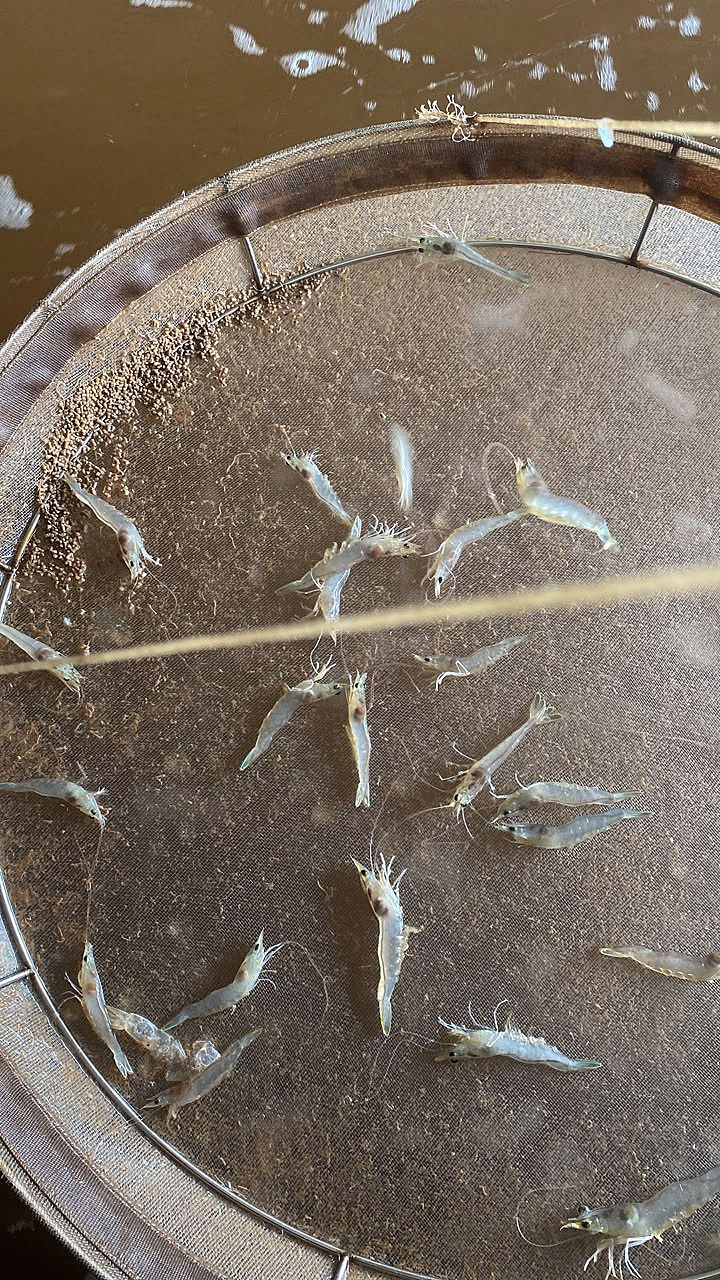
Feeding management is another essential component of the programme. Participants learn how feeding schedules are developed, how feeding requirements are calculated, and how feeding behaviour is monitored to evaluate shrimp performance. They also gain an understanding of carbon-to-nitrogen ratio management and how feeding strategies are adjusted as shrimp continue to grow.
To support these daily management activities, participants are introduced to the proprietary farm management software used by RAS Aquaculture. The software assists with feed planning, feed calculations, production monitoring, and daily record keeping. By learning how digital tools support farm operations, participants gain a better understanding of how data can improve management decisions and production efficiency.
The practical programme also covers shrimp handling techniques. Participants experience post larvae acclimatisation, stocking procedures, shrimp sampling, grading, and basic health assessment. They learn how to observe shrimp behaviour and recognise early signs that may indicate health or environmental problems before they become serious.
Learning Equipment Maintenance
A successful shrimp farm depends on reliable equipment operating continuously throughout the production cycle.
During the practical training, participants learn how routine inspections and preventive maintenance are carried out on essential farm equipment such as paddlewheel aerators and root blowers. They become familiar with important components including motors, bearings, belts, couplings, and air filters, while understanding how regular maintenance reduces the risk of unexpected equipment failures that could affect shrimp survival.

Rather than simply understanding how equipment works, participants learn how to keep equipment operating efficiently under real farming conditions.
Experience the Harvesting Process
Harvesting is one of the most important stages of commercial shrimp production because it directly influences product quality and market value.

Participants observe and participate in the harvesting process, learning how harvests are prepared, how shrimp are handled immediately after harvest, and how proper post-harvest handling helps maintain freshness and quality. They also gain an understanding of the complete workflow from production to packing and customer delivery.
By experiencing the full production cycle, participants develop a much clearer understanding of how every stage of farm management contributes to the final product.
Why the 2-Day Shrimp Farming Course Comes First
Although the 5-Day Practical Shrimp Farming Experience is highly practical, it is not intended for complete beginners with no prior understanding of shrimp farming.
Before joining the programme, participants are encouraged to complete our 2-Day Beginner Shrimp Farming Course or already have experience operating a shrimp farm.
The 2-Day Course provides the theoretical foundation needed to understand commercial shrimp farming. Participants learn about production planning, startup requirements, investment considerations, biofloc farming principles, common production risks, and the financial aspects of establishing a shrimp farming business.
This knowledge helps prospective farmers evaluate whether shrimp farming is the right business opportunity before making a major investment.
Once participants understand these fundamentals, the 5-Day Practical Experience allows them to transform classroom knowledge into practical skills that can be applied in a commercial farming environment.
From Knowledge to Practical Skills
At RAS Aquaculture, our goal extends beyond teaching the theory of shrimp farming. We aim to prepare farmers for the realities of operating a commercial shrimp farm.
The 2-Day Beginner Course helps participants understand the business, evaluate investment opportunities, and build a strong technical foundation.

The 5-Day Practical Shrimp Farming Experience builds on that foundation by providing real-world exposure to commercial farm operations, daily management, equipment maintenance, water quality control, shrimp handling, harvesting, and production decision-making.
Together, these programmes provide a complete learning pathway for aspiring shrimp farmers—from understanding the fundamentals of the business to developing the practical skills needed to manage a successful commercial shrimp farm.
Because in shrimp farming, understanding the theory is only the beginning. It is practical experience that builds the confidence, judgement, and skills required to operate a productive and sustainable shrimp farming business.


Comments