
What You Don't Expect to Receive from a 2-Day Shrimp Farming Course (Beyond Just Learning Theory)
When most people think about joining a shrimp farming course, they expect to learn the fundamentals of shrimp production. Topics such as shrimp biology, water quality management, feeding practices, disease prevention, and production techniques are certainly essential.
However, successful shrimp farming requires much more than technical knowledge.
Starting a commercial shrimp farm is a significant investment, and making the wrong decisions during the planning stage can lead to unnecessary expenses, poor production performance, and financial losses. A good training course should not only teach you how to grow shrimp but also prepare you to build a profitable and sustainable aquaculture business.
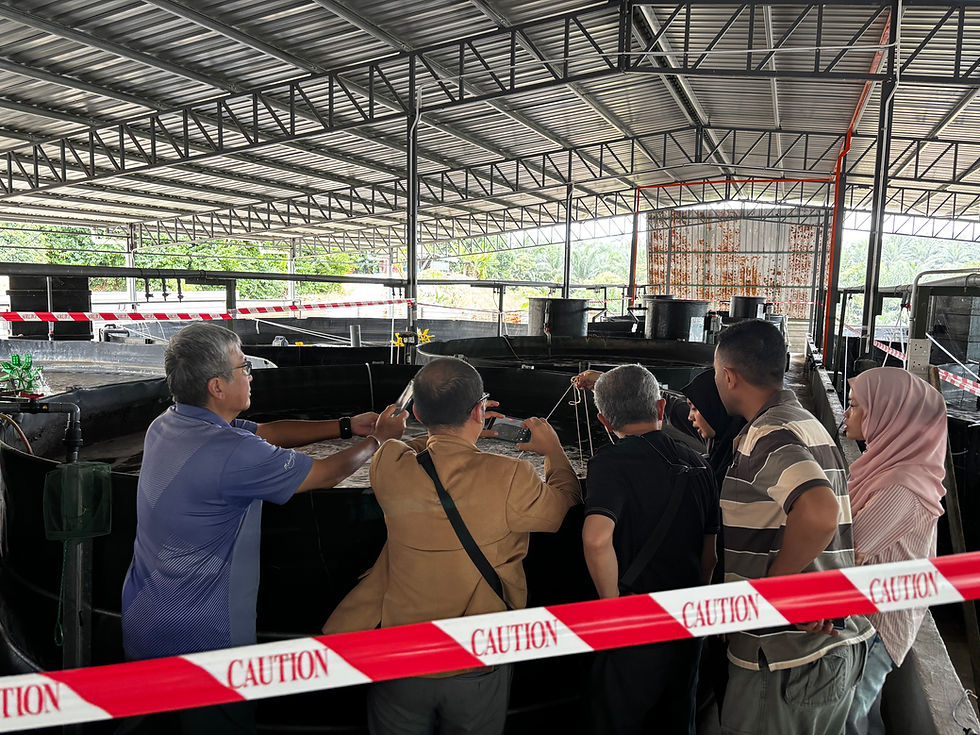
At RAS Aquaculture, our 2-Day Shrimp Farming Course is designed to provide participants with practical knowledge, business planning tools, hands-on farm experience, and ongoing support. Our goal is to help aspiring shrimp farmers make informed decisions before investing and to build confidence throughout their farming journey.
Interactive Shrimp Farming Business Model Calculator
One of the first questions every aspiring shrimp farmer asks is, "How much does it cost to start a shrimp farm?" The reality is that there is no single answer because every farm is different. Your investment depends on factors such as whether you already own land or need to rent it, labour costs, electricity tariffs, water sources, production scale, farming system, stocking density, and your target market.
To help participants evaluate their business plans, we provide an interactive Shrimp Farming Business Model Calculator. Instead of relying on a generic example, the calculator allows you to customise the financial model according to your own circumstances. You can enter your estimated land costs, labour expenses, electricity charges, feed costs, stocking density, expected survival rate, production target, and selling price. Based on these figures, the calculator estimates your capital investment, operating expenses, production cost per kilogram, projected revenue, and potential profitability.
By understanding these financial projections before construction begins, participants can evaluate whether their business plan is realistic and financially viable. Successful shrimp farming begins with careful planning rather than guesswork.
Shrimp Farming Calculation Software
Water quality management is one of the most challenging aspects of shrimp farming, especially for new farmers. Every day, farmers need to calculate the correct amount of salt and water treatment chemicals required to maintain a healthy culture environment. Questions such as how much salt is needed to increase salinity, how much calcium or magnesium should be added, or how much alkalinity booster is required are common throughout the production cycle.
Many beginners struggle with these calculations and often rely on estimation, which may result in overdosing, underdosing, unstable water quality, unnecessary operating costs, and poor shrimp performance.
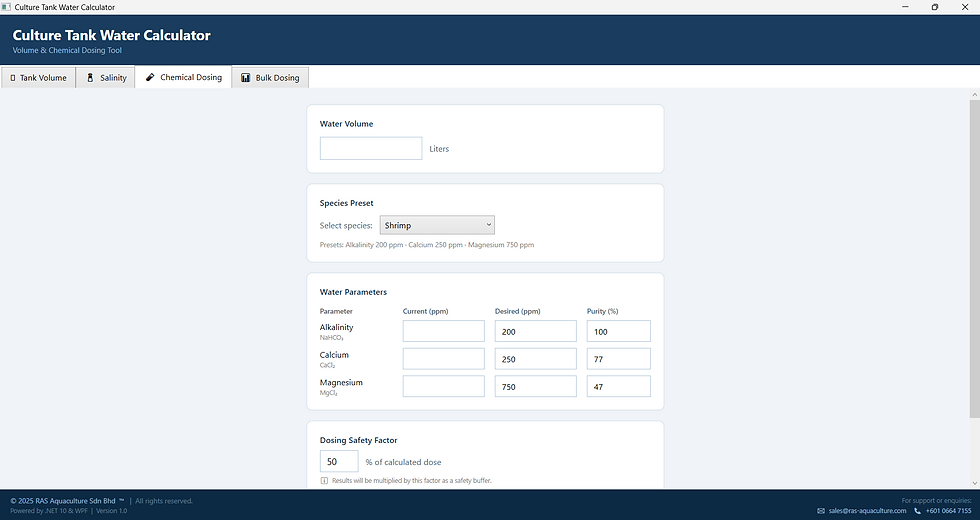
To simplify these daily calculations, every participant receives our Shrimp Farming Calculation Software. The software calculates salt requirements and chemical dosages accurately based on the volume of water and the desired water quality parameters. Instead of relying on guesswork, farmers can make more accurate decisions that improve consistency, reduce waste, minimise unnecessary expenses, and create a healthier environment for shrimp growth.
Learn What Happens After Growing Shrimp: Harvest, Packing and Sales

Many people focus entirely on learning how to grow shrimp, but producing healthy shrimp is only one part of running a successful shrimp farming business.
Once the shrimp reach market size, farmers must also understand how to harvest them efficiently, maintain their quality after harvest, package them correctly, and prepare them for the market. Without proper post-harvest handling, even high-quality shrimp can lose value before reaching customers.
During the course, we share practical knowledge gained from operating our own commercial shrimp farm. Participants learn the harvesting methods we use, how we handle shrimp immediately after harvest, the packing practices that help preserve product quality, and the basic marketing strategies used to sell farmed shrimp. Understanding both production and business management enables farmers to maximise the value of their harvest rather than focusing solely on production.
Equipment and Farm Setup Procurement Guide
Purchasing equipment is often one of the largest investments when establishing a shrimp farm. Unfortunately, many beginners buy equipment without fully understanding whether it is suitable for their farming system or production scale. This often leads to unnecessary spending or equipment that does not perform efficiently.

To help participants avoid these costly mistakes, we provide a practical Equipment and Farm Setup Procurement Guide. Throughout the course, we explain the purpose of the essential equipment required in commercial shrimp farming, including culture tanks, aeration systems, water pumps, water treatment systems, and water quality testing equipment. More importantly, participants learn what specifications to consider, how different equipment functions, and how to plan their investment according to their production goals. This helps farmers make informed purchasing decisions instead of relying solely on supplier recommendations.
Access to Quality Shrimp Post Larvae
Even the most advanced farming system cannot compensate for poor-quality shrimp seed. The quality of post larvae plays a major role in determining growth rate, survival, feed efficiency, disease resistance, and overall farm productivity.
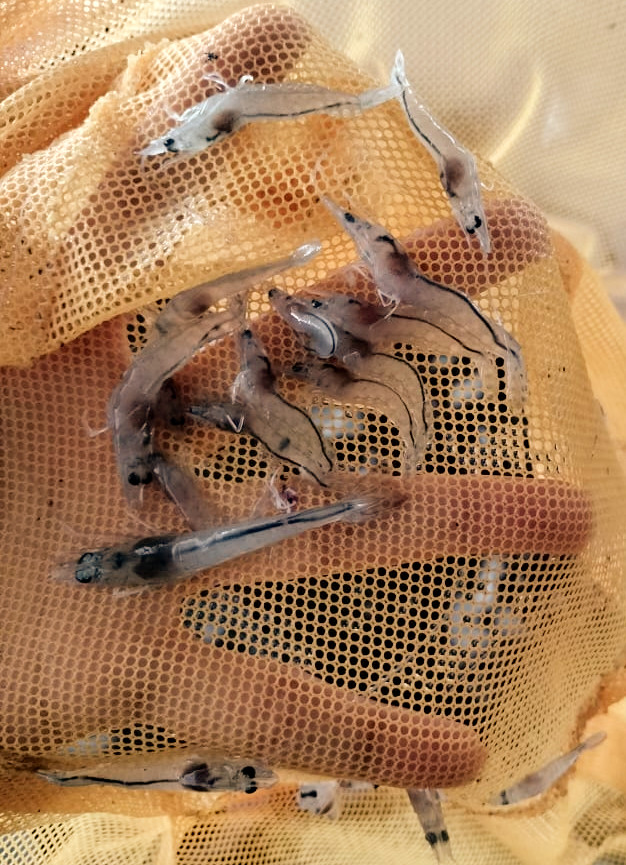
Through RAS Aquaculture, participants can also gain access to quality shrimp post larvae to help establish a stronger foundation for their farming cycle. Beginning with healthy, high-quality seed significantly improves the likelihood of achieving consistent production performance and better harvest results.
Bring Your Own Water Sample for Testing
Water quality is one of the most important factors influencing the success of shrimp farming. Before investing in a commercial farm, it is essential to determine whether the available water source is suitable for shrimp production.

For this reason, participants are encouraged to bring a water sample from their proposed farm location during the course. Our technical team will analyse the water parameters, explain the test results, and discuss any limitations that may affect production. Participants will also receive recommendations on the improvements that may be required before construction begins. This process provides valuable information that helps reduce risk and allows farmers to make better investment decisions.
Continued Support After the Course
For many people, the biggest challenge begins after the course has ended. Once they return home and start operating their own farms, questions and unexpected problems inevitably arise.

At RAS Aquaculture, we believe learning should continue beyond the classroom. Every participant is invited to join our exclusive WhatsApp Community, where they can continue asking technical questions, share their farming progress, discuss challenges with other shrimp farmers, and receive ongoing guidance from our technical team.
This continued support ensures that participants are not left to solve problems on their own and helps them gain confidence as they develop their farming experience.
More Than Just a Shrimp Farming Course
Starting a shrimp farm requires much more than understanding shrimp biology and production techniques. It requires careful planning, informed financial decisions, practical management skills, and continuous learning.
One of the biggest mistakes new farmers make is investing in a farm before fully understanding the business. At RAS Aquaculture, our mission is to help participants avoid costly mistakes by providing not only technical knowledge but also practical tools, business planning resources, real farm experience, and long-term support.
Our 2-Day Shrimp Farming Course is designed to prepare aspiring farmers for every stage of the journey—from planning and farm setup to production, harvesting, marketing, and ongoing farm management. Whether you are planning to build your first shrimp farm or expand an existing operation, this course provides the knowledge, confidence, and practical experience needed to move forward successfully.
We look forward to welcoming you to RAS Aquaculture and supporting you on your journey towards building a successful and sustainable shrimp farming business.


Comments